11-3-2014
Francis Sullivan
TJHC
The tears rolled down John Ellis’ face as he recounted the abuse he
suffered as an altar boy in Bass Hill in Sydney in the mid 1970s. At the
second Royal Commission hearing concerning Towards Healing in Sydney
this week, Mr Ellis explained how his misery continued as he attempted,
but failed, to sue the Church for justice.
Listening to Mr Ellis speak of his suffering and loss was
distressing. It may be of small consolation to him, but his battle has
played no small part in prompting the announcement this week of a major
reform proposal within the Catholic Church.
The reform, which would see every Bishop, every diocese and every
religious order make available a legal entity, covered by insurance and
wealth, that survivors of child sex abuse can sue, is a major change in
the legal approach of some church bodies to litigation.
This has not always been the case and is the very hurdle John Ellis
came up against when he attempted to sue the Archdiocese of Sydney.
The confusing structure of the Church, and previous legal cases, have
often been a deterrent for survivors of child sex abuse to make a claim
against the Church. This can no longer be the case. There must be a
consistent, fair and equal approach across Australia for anybody,
anywhere, who has been sexually abused as a child by the Church.
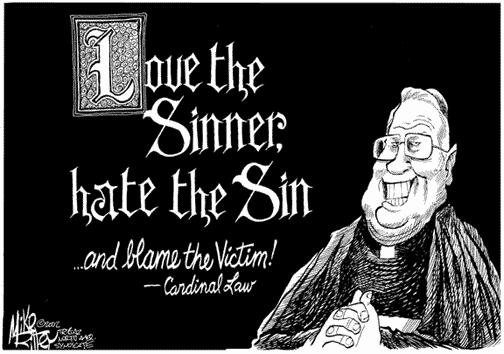
In the past the Catholic Church has been slow to act on issues of
clerical child sex abuse, and placed the interest of the Church ahead of
victims.
Our very real hope is that by making these changes survivors of child
sex abuse will no longer feel thwarted by the Church. As in many other
institutions, people wanting to take legal action against the Church for
sexual abuse need to have their cases tested on the merits not denied
because of a legal technical issue.
We want survivors to know if they go down the litigation path they
won’t have to run up against any confusion, which effectively denies
them an entity to sue.
In her opening address at this week’s hearing Gail Furness, senior
council assisting the Royal Commission, quoted from Cardinal Pell’s
witness statement to the Commission.
It was pleasing to hear the Cardinal say that in his view, despite
the findings in the landmark Ellis case, he believes the Church in
Australia should be able to be sued in cases of child sex abuse. This is
a welcome response and consistent with proposals the Truth Justice and
Healing Council (TJHC) has developed.
The TJHC has now put forward two reforms proposals that we hope will assist survivors find justice and begin a healing process.
The first is a National Compensation Scheme that involves an
independent authority investigating and determining compensation, which
would be paid by the Church or any other institution responsible for the
abuse.
This second proposal, to ensure there is an entity within each
diocese or congregation that can be sued, provides survivors with at the
very least a starting point if they want to take legal action against
the Church. This forms an important part of our Issues Paper, ‘Civil
Litigation’ that we will submit to the Royal Commission at the end of
this month.
[...]
This is a difficult time for everyone. We will not make excuses, or
attempt any sort of spin. The only thing we can do is work harder,
listen better and understand more.
----- Original Message -----
From:
Sent: Friday, December 20, 2013 7:18 PM
Subject: tav. Bisschop Frans Wiertz
Geachte Heer,
Hiermee verzoek ik U contact op te (laten) nemen
met de Heer ...., medewerker van uw bisdom.
Naar ik heb begrepen is de Heer .... die ik
verder niet ken en wiens naam ik niet onmogelijk foutief spel, secretaris van de
juridische afdeling van uw bisdom.
Ik had vanmiddag slechts een nogal uitgebreid
telefonisch contact met de Heer .... dit nadat ik door een
voorlichtingsmedewerker gezien mijn vraag naar de juridische afdeling werd
doorverwezen. Deze medewerker kon mij zelf niet doorverbinden daar ik via een 06
nummer naar hem doorgezet was.
Aanvankelijk zou ik verbonden worden met een
vrouwelijke juridisch medewerker, na 2x terugbellen zou ik bij de Heer ....
moeten zijn (?)
Mijn verzoek aan U is het gevolg van het mij
buitengewoon verontrustende gesprek dat ik vervolgens met de Heer ... had en
ik tenslotte een eind heb gemaakt.
De Heer ....heeft mij meerdere malen en in niet
mis te verstane bewoordingen laten weten dat door mijn telefoontje zijn kerst
c.q.de rest van het jaar volledig "verpest" (zijn woorden) was.
Dat spijt mij buitengewoon.
Uit het gesprek met de Heer ...., datgene wat hij
zei en zeker de wijze waarop hij dit deed was, behalve bijzonder verdrietig (en
dien overeenkomstig grof )
kan ik niet anders dan concluderen dat dit door de
Heer .... heel duidelijk zo ervaren emoties voortkomend uit diens, zoals hij
meedeelde de afgelopen 3 jaar opgedane ervaringen zijn.
Ik heb ons gesprek beeindigd.
Ik wens de Heer .... niet anders dan hele goede
dagen.
Van (historisch) (seksueel) misbruik zijn niet
slechts de historische slachtoffers slachtoffer.
Ik hoop van harte dat - en dat bepaald niet alleen
voor de Heer ... (en de zijnen) - u dan wel wie dan ook vanuit
uw organisatie de Heer .... datgene kan bieden waarop ook hij recht maar
vooral ook kennelijk ernstige behoefte heeft, mij
restte niet anders dan het gesprek beeindigen.
En mijn erkenning van de realiteit, bij deze dus
mijn verzoek daarom.
Met mijn dank.
Ik wens ook U goede dagen.
Met groet


 Mooie zin natuurlijk
 “We would like to re-archive your publication periodically to record significant additions and changes.”


 taal en rekentests
 Where there is a significant dispute about the facts,