zaterdag, april 12, 2014

Roermond We gaan daarmee niet te koop lopen. We treden hiermee niet actief naar buiten

Bisdom wist al maanden van misbruik Gijsen


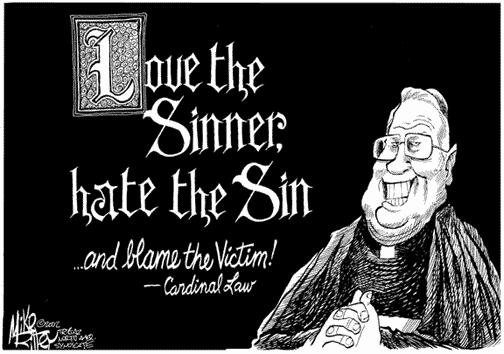
Het bisdom Roermond wist al op 11 februari dit jaar dat oud-bisschop Jo Gijsen kinderen heeft misbruikt in de tijd dat hij nog kapelaan was in Zuid-Limburg. Het bisdom heeft deze informatie al die tijd 'onder de pet gehouden', erkende een woordvoerder van het bisdom vandaag.

Op 11 februari deed de zogenoemde Klachtencommissie voor seksueel misbruik in de RK Kerk uitspraak in een zaak tegen Gijsen. De procedure is, dat zowel het bisdom als het slachtoffer dat geklaagd heeft hiervan direct op de hoogte wordt gebracht, zei de woordvoerder van het bisdom. 'We gaan daarmee niet te koop lopen', lichtte de woordvoerder toe.


 'We treden hiermee niet actief naar buiten, dat lijkt mij begrijpelijk', aldus de woordvoerder.

Hij erkende verder dat het bisdom al langere tijd een verklaring klaar had liggen 'voor het geval een journalist zou bellen'. Volgens de woordvoerder treedt het bisdom niet actief naar buiten met privacygevoelige informatie. 'We willen de slachtoffers geen publiciteit bezorgen waaraan ze geen behoefte hebben', zei hij.


Slachtoffer
De uitspraak werd op 11 februari ook gepubliceerd op de website van het Meldpunt Misbruik RKK. Daaruit blijkt dat Gijsen toen (in 1961) als priester van seminarie Rolduc een slachtoffer, toen nog een kind, bij zich liet komen in de kamer van de overste van een jongenspensionaat. Het gaat daarbij volgens bronnen om Bleijerheide bij Kerkrade. Uit de verklaring blijkt dat het kind zich moest uitkleden en laten betasten, onder meer aan zijn geslachtsdeel.

Daarbij zou Gijsen het kind 'voorlichting' hebben gegeven over liefde en zaadlozingen. De man heeft de rest van zijn leven grote psychische problemen gekregen. Nog voor Gijsen op 24 juni 2013 stierf, liet hij in een verweer weten er niets mee te maken te hebben. Maar de klachtencommissie is ervan overtuigd dat Gijsen de jongen wel degelijk heeft misbruikt en daarbij misbruik heeft gemaakt van zijn machtspositie.


Meldpunt: Wij informeerden bisdom direct over Gijsen


ZA 12 apr 2014 | 21.06
Het Meldpunt seksueel misbruik in de RK Kerk heeft de standaardprocedure gevolgd en het bisdom Roermond direct geïnformeerd over het misbruik door oud-bisschop Jo Gijsen. Ook de twee slachtoffers zijn direct op de hoogte gesteld. Dat zegt woordvoerder Ben Spekman van het Meldpunt.

Het bisdom zwijgt al twee maanden over het misbruik door Jo Gijsen. Pas toen gisteren het nieuws bekend werd, kwam het bisdom met een verklaring. Desgevraagd, maar niet uit zichzelf.

Het Meldpunt hoeft aan een uitspraak geen publiciteit te geven. "Het Meldpunt heeft geen meldingsplicht", vat Spekman samen. "De uitspraak is vertrouwelijk."

Bron: ANP
KLIK


bron


de man met visie

klik


klik


Gouden lamp voor Sweetie

woensdag, april 09, 2014

kapelaan Berntsen en pastoor Koning Antoniusparochie Spoorstraat Koningin des Vredesschool Lyceumstraat Oldenzaal Oproep slachtoffer

De omvang van het seksueel misbruik in de pastorie van de Antoniusparochie is mogelijk groter dan tot nu toe is verondersteld. Niet alleen kapelaan Berntsen zou zich er in de jaren zestig stelselmatig schuldig aan hebben gemaakt, ook pastoor Koning heeft zich mogelijk in erge mate vergrepen aan jongens die al dan niet als misdienaar in de kerk aan de Spoorstraat actief waren.

Bovendien moet het toenmalige hoofd van de Koningin des Vredesschool aan de Lyceumstraat, waar de jongens naartoe gingen, hiervan hebben geweten, meent een Oldenzaler, die zegt seksueel misbruikt te zijn door pastoor Koning. „Dat kan niet anders”, zegt hij. „Maar hij zweeg, zoals iedereen in die tijd.”

mijn verhaal”, vertelt de Oldenzaler, die anoniem wil blijven. „Ik had er al die jaren mee geworsteld. Pas nadat ik met de andere slachtoffers ben gaan praten, ging ik aan mijn schaamte en schuldgevoel voorbij en heb me bij de stichting KLOKK gemeld, die het seksueel misbruik in de katholie ke kerk onderzoekt en hulp biedt.”

Bij de behandeling van de zaak door het bisdom werd de Oldenzaler bijna volledig in het gelijk gesteld. Alleen voor een paar seksuele handelingen die de pastoor bij hem zou hebben verricht, vond hij geen gehoor. „Dat moest ik bewijzen, maar dat kan ik natuurlijk niet. Ik was immers alleen met de pastoor en de pastoor is dood.” Hij voelt zich geschoffeerd.

„Het bisdom speelt een spelletje. Aan de ene kant geven ze je gelijk, maar aan de andere kant zeggen ze: bewijs het maar. En dat is onmogelijk. Het bisdom is hier aanklager en rechter tegelijk.

En als er beroep wordt ingesteld dan wordtdat door de kerk zelf afgehandeld volgens eigen regels.
Daar wringt de schoen.

Om zijn gelijk en zijn gram te halen treedt hij daarom bewust in de publiciteit. Vanuit zijn stellige overtuiging dat er in de pastorie aan de Spoorstraat veel meer slachtoffers van seksueel misbruik zijn gemaakt. „Dit heeft verscheidene jaren geduurd.”

Hij roept deze mensen op zich alsnog te melden. Nu het nog kan. „Want”, zegt de Oldenzaler, „het bisdom sluit medio dit jaar de termijn waarin slachtoffers van seksueel misbruik zich kunnen melden.

Het is nu of nooit meer.”

‘Bij de pastoor op schoot in de serre van de pastorie’

Hij ziet zichzelf nog staan in de toren van de Antoniuskerk met het klokkentouw in  handen
„Pastoor Koning  leerde ons als kinderen hoe we de klokken moesten luiden.
Als ik het touw vasthield, werd ik naar boven getrokken en hield hij me strak vast. Hij stak daarbij
zijn handen in mijn korte broek en betastte me. Dat deed hij ook bij andere kinderen.”

De destijds 10-jarige Gerard Bennecom* uit Oldenzaal zocht daarom ook niets achter het gedrag
van de pastoor. „We wisten toch helemaal van niets in die tijd; we waren zo groen als gras op
seksueel gebied.” Achteraf weet Bennecom wel beter; het was daar in de klokkentoren de volgens
 zijn zeggen eerste keer dat hij door de pastoor seksueel werd misbruikt. Maar daarbij bleef het niet.
Meer dan drie jaar zou hij door Koning zijn misbruikt, in en om de pastorie aan de Spoorstraat. Hij
besefte toen niet wat er gebeurde. Hij deed er het zwijgen toe omdat de pastoor hem dat telkens weer
op het hart drukte, vertelt hij.

Heel zijn leven droeg de Oldenzaler zijn grote geheim met zich mee. Tot twee jaar geleden zijn ogen plotseling werden geopend toen kort na elkaar in deze krant artikelen verschenen waarin twee andere slachtoffers hun verhaal deden over pastoor Koning en kapelaan Berntsen van de Antoniusparochie. Bennecom was 10 jaar toen hij misdienaar werd in de Antoniuskerk. Franciscus Koning was er


pastoor en later maakte ook kapelaan Berntsen er zijn opwachting

Bennecom had al vele keren als misdienaar onder pastoor Koning gediend toen hij opeen dag wat
aan de late kant was voor een mis.
De koster was er niet. „In de sacristie greep ik de eerste de beste toog en trok die gauw aan,maar tijdens de mis bleek dat de toog te lang voor mij was en daarop werd ik meteen na afloop aangesproken door de pastoor. Hij was woest. Ik dacht eerst dat hij me wilde straffentoen hij me strak vastpakte. Maar ineens begon hij me te tongzoenen. Ik begreep er niets van,vond het walgelijk. Ik ruik nog die vieze sigarenlucht uit zijn mond.”
Hij zwijgt even. „Toen greep hij me van achteren vast en ging hij met zijn handen in mijnkorte broek. Later begreep ik dat deze handeling voor hem een seksuele lading had. Ik voelde me gevangen. Het duurde een paar minuten, hij zei niets, maar gromde en kreunde.” Dezelfde avond kwam pastoor Koning bij hem thuis, vertelt de Oldenzaler. Volgens hem kreeg zijn moeder te horen dat haar zoon zich beter moest gedragen als hij nog langer misdienaar wilde blijven. De pastoor kwam, zo vertelt hij, vaker bij hem thuis als hij zijn lusten weer eens op hem had botgevierd. De serre achter de pastorie was volgens de Oldenzaler een geliefde plek voor de pastoor. „Hij vroeg heel vaak of ik bij hem in de serre wilde gaan zitten, op schoot.
Hij liet me prachtige boeken zien en wilde en passant weten of ik thuis wat vertelde. Daarbijkon hij zijn handen niet thuishouden. Als ik wegging zei hij steevast: thuis niets zeggen.”
Het seksueel misbruik ging volgens Bennecom van kwaad tot erger. Ook toen hij geen misdienaar meer was, bleef de pastoor volgens hem doorgaan met zijn misbruik. Een van de grootste trauma’s overkwam Bennecom naar eigen zeggen in de tuin van de pastorie. „Pastoor Koning lokte mij met een smoesje de schuur in. Ineens stond hij achter mij en hij verkrachtte me. Ik wist niet wat me overkwam. Ik weet nog dat ik heel bang was en enorm veel pijn had.”

De geschokte jongen vluchtte nadien huilend de schuur uit en liep doelloos rond. Hij wist niet wat te doen. Uiteindelijk ging hij toch naar huis. „Ik was laat terug, mijn moeder was bezorgd. En ik was o zo bang dat de pastoor ook nog eens thuis zou komen. Ik wilde helemaal niets meer van hem weten.”
Uiteindelijk lichtte Bennecom zijn vader in. „Ik merkte dat hij vreselijk kwaad werd. Praat er niet over, zei hij tegen mij. Ik neem aan dat mijn vader bij de pastoor langs is geweest. Na die tijd kwam Koning niet meer bij ons thuis. Ook hield het misbruik op.”

De opluchting daarover voelde als een bevrijding, zegt Bennecom. Maar het was ook een rare  gewaarwording. „Want de pastoor deed vervolgens net of hij mij niet meer kende. Ik was zijn uitverkorene niet meer. Het gekke was dat ook kapelaan Berntsen mij niet meer aankeek, terwijl hij anders heel amicaal deed tegen me. Toen wist ik nog niet dat ook Berntsen jongens
in zijn kamer misbruikte.”

Voor Bennecom staat het vast dat de pastoor en de kapelaan van elkaar hebben geweten waarmee ze bezig waren. „Ze leefden onder één dak en hadden hun kamers in de pastorie schuin tegenover elkaar.” Bennecom is ervan overtuigd dat er in en om de Antoniuspastorie jarenlang veel meer is gebeurd dat het daglicht niet kan verdragen. Meer dan er volgens hem op dit moment bekend is. „Dat kan niet anders. Ik heb zelf verscheidene kinderen in de serre bij de pastoor op schoot zien zitten. Wat daar allemaal wel niet is gebeurd...”

Na het lezen van de artikelen twee jaar geleden begon een nieuwe worsteling: moest hij wel of niet ook zijn verhaal vertellen? Hij kwam er niet uit. Tot hij vorig jaar in de ambulance op weg naar het ziekenhuis in Enschede met een plotselinge aandoening met de neus op de feiten werd gedrukt. „Ik zag vanuit de ziekenwagen de toren van de Antoniuskerk in een flits voorbijkomen en dacht meteen: straks ben ik er niet meer en dan komen ze er toch nog mee weg.”
Bennecom knapte helemaal op en kwam weer thuis. Hij maakte vervolgens de gang naar de landelijke commissies die zijn ingesteld om het seksueel misbruik te onderzoeken en individuele gevallen te beoordelen. Niet om financiële genoegdoening te krijgen, maar om de erkenning dat hij slachtoffer is van seksueel misbruik in de kerk. Hij werd grotendeels in het gelijk gesteld. „Wat me vooral goed deed, is dat de kerkelijke vertegenwoordiger empathisch reageerde en zijn afschuw uitsprak over alles wat mij was overkomen. Eindelijk iemand die het voor me opnam.”

Dat gevoel kreeg hij niet toen hij de brief las waarin aartsbisschop Eijk zijn spijt betuigde en excuses uitsprak. „Heel onpersoonlijk en al helemaal niet oprecht gemeend. Dat heeft me geraakt.”

Daarom is er Bennecom veel aan gelegen dat het seksueel misbruik in de Antoniuskerk niet in de doofpot verdwijnt. „Er lopen nog veel slachtoffers rond. Ik raad hen aan schoon schip te maken. En daar is veel moed voor nodig. Ik raak nooit meer kwijt wat er allemaal is gebeurd. De schaamte, de vernederingen, het schuldgevoel; deze littekens blijven. En dat blijft pijn doen.”

(*De naam Gerard Bennecom is gefingeerd)


bron
                                                                info


- www.klokk.nl; e-mail: info@klokk.nl


bron

dinsdag, april 08, 2014

maandag, april 07, 2014

Chagall's zebrapad


DTS boete, kaas en eieren

KLIK


Piggy Banks

Mattheus 18
 ”Money! I can do anything for you”
 Hark now hear the devil sing

 basic Catholic teachings, you know, is absolutely unassailable
George Pell

zondag, april 06, 2014

Compensatiecommissie

06042014 21.28 uur: Dit- berichtheader én ondertekening inclusief- werd NIET geplaatst door mij zijnde de persoon die onder gebruik van de fictieve naam Crispina (die ik al z'n jaar of 10 op het internet tbv. deze discussies gebruik!)c.q. verantwoordelijk voor dit weblog Slechts deze afwijzing en beide illustraties werden , om voor de hand liggende redenen, door mij toegevoegd

De onderstaande tekst werd door kennelijk een of andere borstroffelaar, die even wil laten zien wat ie aan technische mogelijkheden heeft.....het kan hets technische macht laten zien: tarzanhetje kan in mijn webblog.

Nou, bij deze dus: geweldig, roffel ze, maar wat mij betreft ben je jaren te laat!

Crispina, gewoon Ik dus.
Zie Dr. Alicia A. Dunlop's Personal Bill of Rights


 Compensatiecommisie behandelt 86 aanvragen

Geplaatst door onze redactie op vrijdag 6 april 2012 om 15:35u (Bron: KLOKK)

In deze 10 zaken vinden met name uitkeringen plaats binnen de categorieën 2 (7.500 Euro) en 3 (tussen de 10.000 en 20.000 Euro) en een enkele keer binnen categorie 1 (maximaal 5.000 Euro). Er zullen spoedig ook uitkeringen volgen binnen de categorieën 4 (25.000 Euro) en 5 (maximaal 100.000 Euro), maar veelal dient in die zaken nog een aantal vragen te worden beantwoord zoals hieronder aangegeven. De commissie werkt permanent aan het uitwerken van uitspraken zodat een volgend reeks uitspraken nog deze maand zal worden verzonden.

In ca 25 aanvragen heeft de commissie inmiddels per brief aan de aanvrager van compensatie nadere informatie gevraagd over de omvang van de geleden materiële schade en het oorzakelijk verband tussen deze schade en het geconstateerde seksueel misbruik. Dit is overeenkomstig artikel 19 van de Compensatieregeling. Van die 25 zijn er zeker 12 waar sprake is geweest van uitzonderlijk misbruik en die vallen definitief in categorie 5 van de regeling. In 13 zaken heeft de commissie nadere informatie gevraagd aan de voorzitter van de Klachtencommissie met betrekking tot de aard en omvang van het misbruik (artikel 15 van de Compensatieregeling).

De commissie heeft in 4 bijeenkomsten sinds haar oprichting eind vorig jaar, ruim tijd besteed om vast te stellen in welk van de 5 categorieën van de Compensatieregeling slachtoffers zouden moeten vallen. Daarbij zijn vragen aan de orde als: welke rol speelt de leeftijd van slachtoffers, hun ten tijde van het misbruik reeds aanwezige kwetsbaarheid, de ernst van het misbruik, mogelijk fysiek geweld en/of letsel, de duur van het misbruik, en of bijvoorbeeld sprake is van één of meer daders, al dan niet behorend tot dezelfde kerkelijke instelling. Ook kan bij de beoordeling meespelen dat de omgeving van bepaalde zaken geweten moet hebben. Inmiddels is er voldoende ervaring opgedaan om de te verwachte stroom van aanvragen binnen de gestelde termijnen naar behoren te behandelen.

vrijdag, april 04, 2014

those people "if what you are telling me is correct, there are hundreds of matters that should have been reported over the years, that haven't been reported". Huilende krokodillen "only in Australia"


HP
"We verdagen, de Commisioner heeft nog een aantal dingen te doen"

"En twee pootjes"
"En elke sufferd snapt het?"
"Elke sufferd snapt het!"


One  of the Salvation Army's top leaders in Australia waited nine months before telling authorities about a known sex abuser, who was also his friend, an inquiry has been told.

Commissioner James Condon delayed reporting Colin Haggar, who was running an army crisis shelter for women and children in 2013, a witness told a royal commission hearing in Sydney.
The commission heard last week that Mr Haggar confessed in 1989 to the mother of an eight-year-old girl that he had sexually assaulted her.

He was dismissed by the army, but re-admitted in 1993 and promoted.

On Friday, the hearing was told that other army officers were concerned about Mr Haggar's continued contact with children and in early 2013 raised the matter with Mr Condon, commander of the army's eastern territory of NSW, Queensland and the ACT.
krokodillen
glad to continue saving more souls

During this hearing, it has been revealed Mr Condon officiated at Colin and Kerry Haggar's wedding and went with Mr Haggar to police after he admitted assaulting the girl.

Simeon Beckett, counsel for the commission, said no records of that police report could be found.

On Friday, the commission heard it was nine months after concerns were raised with Mr Condon that Mr Haggar was involuntarily retired and demoted from lieutenant colonel to major.
Captain Michelle White, director of the army's Young Hope foster care service, said she was approached in early 2013 by two officers who had concerns about Mr Haggar.
They had told Mr Condon, but nothing had happened. Ms White explained there was a mandatory reporting obligation and followed up the matter with Mr Condon.
She pointed out she had a legal, ethical and moral obligation to report "my knowledge that we have an active Salvation Army officer with a known history of a child related sexual offence."
Ms White then met with Mr Condon who said: "Michelle, if what you are telling me is correct, there are hundreds of matters that should have been reported over the years, that haven't been reported".
He also told her "that couldn't be possible".
Ms White said she understood from Mr Condon it would now be reported, but later learned Salvation Army's obligations to report were being explored.
On August 23, she again wrote to Mr Condon and received a short reply that "this matter has been dealt with".

On September 4, she reported the matter herself to the Ombudsman and the guardian's office.
Ms White said Mr Condon wrote to her saying he wished she had not done it without telling them.
She interpreted it as a rebuke.
Ms White also said that she felt conflicted and was aware of the sensitivities and conflicts around friendships in the army.
In the days prior to the start of this hearing, she received an email on Facebook from Kerry Haggar, with whom she was friends.
Ms Haggar is a lieutenant colonel and on the army's executive committee.
The email said "the chain of events you set in place have caused devastation and incredible pain to many innocent people. In attempting to protect families you have caused irreparable damage to mine."

Ms White said she was upset and could understand Ms Haggar's distress, but thought it inappropriate.

Kate Eastman SC, counsel for the Salvation Army, said Ms Haggar had been stood down on Friday.
The commission also heard she will seek leave to be legally represented at the commission, which resumes on Monday.

donderdag, april 03, 2014

Case 10 de 3% regeling


bron CLAN
Amos 5:24
"I decided to check it out ... the prophet Amos was talking about a corrupt church, religious group who were unethical in their behaviour and judgment was about to fall on them,
I think that was a prophetic statement,"


dinsdag, april 01, 2014


[...]

One important indicator is the number of cases of abuse of which we are aware coming from any particular institution. Many different institutions have come to our notice. In addition to the significant number of reports of abuse in foster care, we have received allegations of abuse in more than 1,950 institutions. For this purpose we define an institution as a separate body which may be part of a large organisation. For example, an individual parish or school may be part of a larger denominational structure.

In 168 of these institutions, we have received allegations from five or more victims.

There are also 13 institutions where we have received allegations from 30 or more victims.

Although the Royal Commission has been given significant resources, they could never be sufficient to allow the examination of more than a relatively small selection of the institutions in which we are aware there have been problems.

I am sorry that many people will be disappointed that their particular institution and their own story will not be publicly examined.

Justice McClellan
 March 31, 2014
2014 Families Australia Oration

Baxley--> Lewis Blayse net klik


klik


Catholic Church pays abuse compensation from grant interest


CHILD sex abuse victims are being compensated out of interest the Catholic Church earns from investing the billions of dollars it receives in government grants for schools. 
 
The Royal Commission into Institutional Responses to Child Sexual Abuse has received evidence from a church whistleblower suggesting at least one Catholic diocese ultimately profits from interest received on state and commonwealth government education grants.
The Australian has also confirmed that the practice, under which the grants are compulsorily invested in accounts held within each diocese’s “internal treasury” or development fund, also takes place elsewhere across NSW, Victoria and Queensland.

Each diocese’s development fund acts like a bank, repaying an agreed rate of interest on the education funds they hold to the schools. They also pool this money with other assets invested with commercial banks at a higher rate of interest, often generating multi-million-dollar, tax-free surpluses each year.
Part of this money is, in turn, transferred to special funds under the direct control of each bishop and at least one regional diocese is understood to have transferred more than $1 million in this way last year. In some dioceses, these discretionary funds are then used to pay for the lawyers and compensation payments involved in abuse cases brought against the church.

Details of the church’s ­finances are rarely made public and the existence of this money trail has been criticised, including by those who have received compensation payments for such
abuse. Chrissie Foster, two of whose daughters were raped by a Catholic priest, said: “It shouldn’t be the government’s money, nor the parishioners’ money paying for all of this. It should be the church coffers, money from Rome or selling assets. Otherwise they’re just getting away with it. That (financial) loss focuses them to do the right thing.”

When the royal commission was announced in November 2012, the leaders of the Australian Catholic Bishops Conference estimated the church would need to find about $60m to meet the likely legal fees and increase in compensation payments involved.

While there is nothing improper about the church’s use of interest payments to meet this cost, a church source said he had a “moral concern” about how the funds were managed. “I don’t know of any other organisation whose subordinates receive hundreds of millions of dollars in government grants and they’re compelled to transfer that money to a centralised fund which profits from it,” said the source, who has spent decades working in the church.

The development fund is also able to use the grant money it holds to lend money to individual schools to fund specific developments, the source said — money that is then repaid plus interest.
“That money that the bishop gets, he can do what he likes with it. He can fund his diocese or he can fund sexual abuse payments. I’ve got a big moral concern about it,” the source said.

NSW Catholic Education Commission executive director Brian Croke said there was an expectation and a legal requirement that any interest earned on government school grants was spent on education. “As far as the commission is concerned, all the funds from state and commonwealth are fully and externally audited at every level, and are paid and distributed for the purposes they’re designed, including the interest earned by those funds,’’ he said.

A NSW Education Department spokesman said it “does not prescribe to the Catholic system where funds should be held before being disbursed to the dioceses” but legislation “requires that funds are used for the running of the school”.

Catholic schools in the state are audited and the diocesan education system required to certify it “does not operate for profit within the meaning of” this legislation, he said. “If there is evidence that funds are not being used for this purpose or are being withheld or misused, then this would raise questions about compliance …

Any such evidence should be provided to the NSW government for investigation.”

As church organisations are not required to publish accounts, The Australian has not been able to establish how much revenue many Catholic dioceses generate in interest paid on education grants. The federal and state governments last year provided more than $6.3 billion in education funding to dioceses ­nationwide. Church sources suggest that after meeting commitments to schools, individual dioceses retained a likely tax-free margin of up to 2 per cent on their investment of this money. Only a fraction of these proceeds may be used to meet the dioceses’ liabilities for child abuse, the bulk of which are often reclaimed from the church’s insurer.

Nor is every diocese within the church understood to operate in this way. The Archdiocese of Sydney, whose accounts were publicly revealed for the first time during last week’s royal commission hearings, does not insist that all the roughly $615m education funding it receives annually be invested in its development fund.

The roughly $3m the Sydney archdiocese last year spent on “Special Issues” and other royal commission costs was also met from a separate Procurement Fund, which itself controls more than $426m in assets.
The archdiocese’s business manager Danny Casey said “The internal treasury, the Sydney Catholic Development Fund … does generate a surplus. The surplus has not been used to meet obligations to victims of abuse nor has it been used to cover the costs of the royal commission.”

Francis Sullivan, chief executive of the Catholic Church’s Truth, Justice and Healing Council, defended the wider church’s use of money made from interest payments on education funding.
“If (it) is about using it for the purposes that the church is for, which is relieving distress, disadvantage and people who are underprivileged, then it’s justified. Certainly, providing compensation payments and repatriation payments for clerical sexual abuse is justified,” he said.

  "The Commissioners’ hope is that..."


Review payments to abuse victims: commissioner

INSTITUTIONS should review all payments made to children in their care that had been sexually abused, according to the head of the royal commission examining the organisations’ responses.

Judge Peter McClellan, who is chairing the royal commission, yesterday told a child protection workers’ conference that the question of whether a national redress scheme should be set up for abuse survivors was challenging but some institutions had already taken “significant” steps.

He pointed to a Salvation Army commitment to review all payments made to abuse victims to ensure they were fair, and a similar “opinion” from Cardinal George Pell regarding people abused within the Sydney Archdiocese.

“I suspect, and the Commissioners are hopeful, that as a result of the Royal Commission’s focus on this issue other institutions will respond in a similar manner,” Justice McClellan said.
“It is apparent from the work we have already undertaken that designing a fair redress scheme, assuming that one should be created, raises significant and difficult questions.

“We are listening to people whose lives have been damaged and in some cases destroyed by the perverted actions of adults, people who both they and their parents had a right to trust.”

Child abuse survivors have pushed for the commission to recommend a national redress scheme, and the removal of legal barriers that prevent successful lawsuits against organisations where abuse occurred.
Justice McClellan gave the Melbourne Childaware conference updated statistics on the cases brought to the commission, saying he had referred 141 matters to police.

Analysis of the 1426 private sessions with the commissioners shows that 62 per cent of people who told their stories were sexually abused in a faith-based institution.
Almost 35 per cent were ab­used as children in a school setting and 30 per cent of people were abused in welfare institutions, including orphanages, children’s homes and residential facilities.

Justice McClellan said 41 per cent of institutions mentioned in private sessions were run either by a Catholic order or diocese, while government-run institutions accounted for 21 per cent.


Luc van Looy, Gent, dient zijn ontslag in !

bron